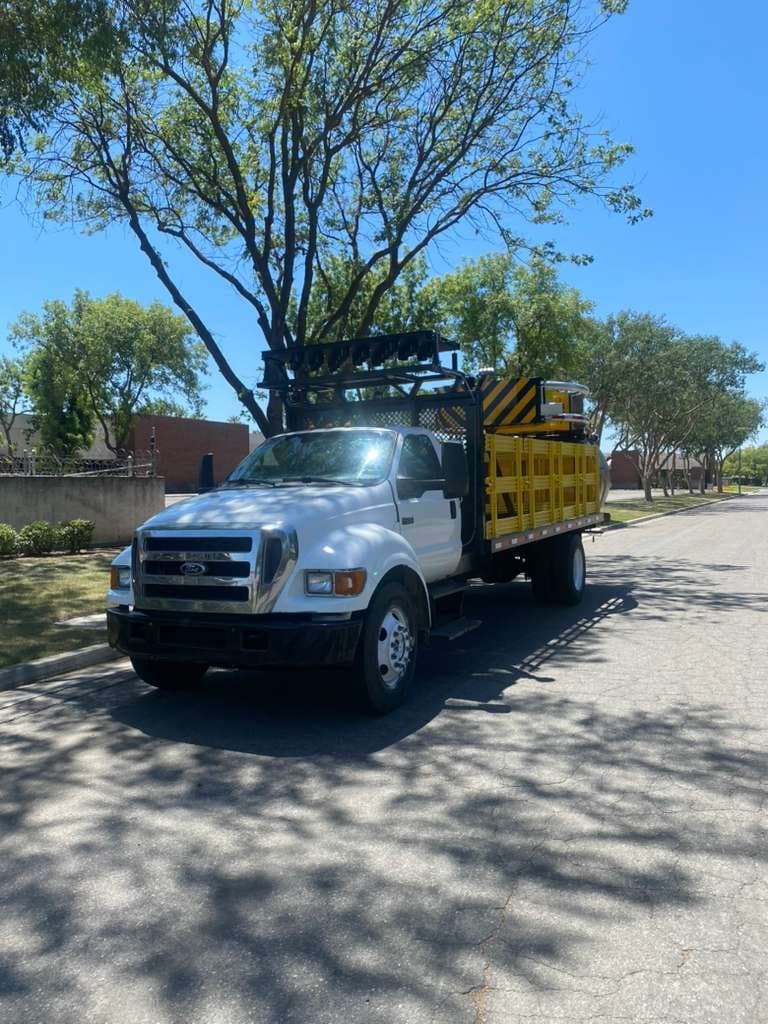
How TMAs Absorb Vehicle Impact
Impact absorption is the whole reason a TMA exists. This explains the physics in plain terms and why chassis mass is as important as the cushion itself.
A truck-mounted attenuator absorbs impact by managing deceleration. A vehicle carries kinetic energy proportional to its mass and the square of its speed. The attenuator does not make that energy disappear; it spreads the stop over distance and time, which keeps the forces on the occupant survivable.
The two parts doing the work
Absorption is a partnership between the cushion and the host truck. The cushion crushes to soak up energy. The truck's mass keeps the whole assembly anchored so it does not just get shoved down the road into the crew. Take away either half and the protection drops.
- The cushion crushes progressively, stretching the deceleration over its length
- Host chassis mass of about 26,000 lb GVWR or more resists rollahead and underride
- The cab steers residual energy out the coffin corner, away from the operator
- TL-3 units are validated near 62 mph for 50 mph postings and above
Why speed dominates the math
Because energy rises with the square of speed, a small jump in impact speed is a large jump in energy the cushion must handle. That is why test levels are tied to posted speeds. Running a TL-2 unit on a 55 mph road asks it to absorb far more than it was tested for.
Need a truck spec'd or serviced?
Tell us the job and we'll help — to buy, rent, or lease.