
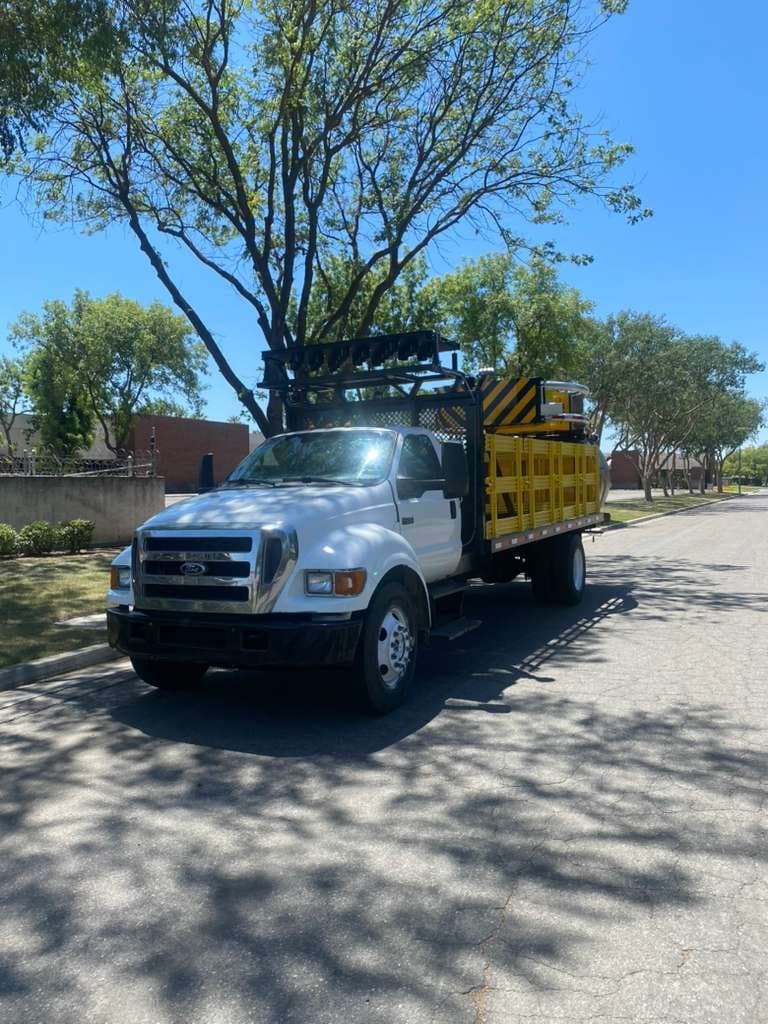
How TMAs Prevent Accidents: What the Field Shows
The value of a TMA is clearest in the moments it absorbs a hit. Here is how these trucks perform in the scenarios crews face most.
A TMA earns its cost in the seconds after a driver fails to stop. The design goal is simple: put a truck between live traffic and a crew, and make that truck absorb the impact in a controlled way. Here is how that plays out across common work-zone situations.
Mobile striping operations
A striping crew moves down a lane at low speed with traffic passing close. The TMA follows behind as a shadow vehicle. When a distracted driver drifts into the closed lane and strikes the attenuator, the unit absorbs the energy and steers the vehicle away from the cab's coffin corner. The crew ahead never feels the impact.
Highway lane closures
On a 60 mph highway, a TL-3 attenuator is rated for the speeds involved, tested at roughly 62 mph. A vehicle approaching the closure at highway speed hits the attenuator instead of the workers. The heavier chassis, around 26,000 lb GVWR or more, keeps the striking vehicle from riding under the truck, so the impact is absorbed rather than passed through.
- Shadow positioning keeps the truck, not a worker, in the impact path
- Controlled deceleration reduces harm to the errant driver too
- Correct test level ensures the unit is rated for the speed
- Adequate GVWR prevents underride at highway speeds
The pattern is consistent: a properly spec'd TMA converts a potential crew fatality into a repairable truck and a survivable crash for the driver at fault.
Need a truck spec'd or serviced?
Tell us the job and we'll help — to buy, rent, or lease.