
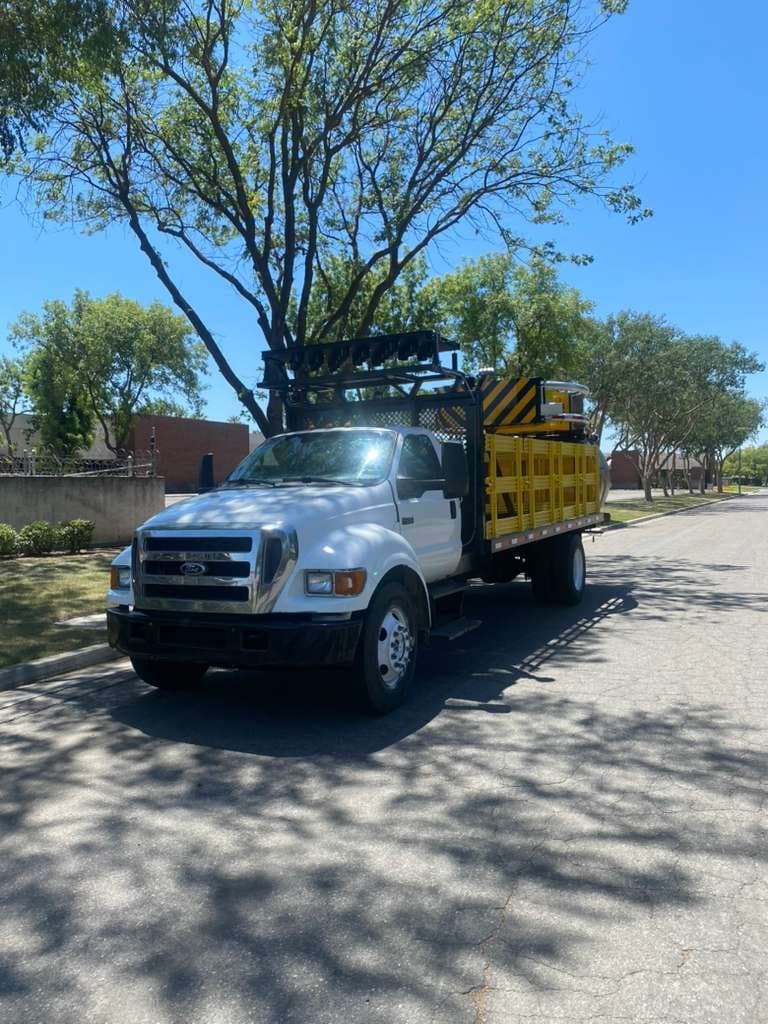
7 Best Practices for Deploying TMAs on Texas Freeways
Freeway speeds leave no margin for a poorly placed attenuator. These seven practices keep a TMA doing its job on fast Texas highways.
On a Texas freeway, a TMA is protecting a crew from vehicles moving at 60 or 70 mph. How the truck is set up and positioned decides whether it performs. These practices come down to matching the equipment to the speed and putting it where it can work.
The seven practices
- Use a TL-3 unit on any freeway posted at 50 mph or above.
- Keep the correct roll-ahead distance between the TMA and the crew so the truck can absorb the hit.
- Confirm the host truck meets its weight rating, roughly 26,000 lb GVWR or more.
- Run the arrow board and warning lights on the approach the whole time.
- Deploy the attenuator fully, it lowers in about 20 seconds, and verify it locked.
- Do a pre-shift walkaround for damage, leaks, and light function.
- Keep a trained operator in the cab and everyone else clear of the coffin corner.
Why the details matter at speed
The higher the speed, the more energy the attenuator has to manage, near 62 mph in a TL-3 crash test. Roll-ahead distance gives the truck room to decelerate the errant vehicle instead of transmitting the shock straight to the crew. Skip that spacing and even a compliant unit cannot do its job. On a mobile operation, keep the TMA moving with the work at a safe following distance.
The attenuator can roll at speeds up to 50 mph during a mobile operation, but the crew ahead sets the pace, not the truck.
Need a truck spec'd or serviced?
Tell us the job and we'll help — to buy, rent, or lease.