Message Boards and Roadwork Communication
Drivers need to understand a work zone before they reach it. Changeable message signs and arrow boards do that job when they carry the right message at the right distance.
A work zone works only if approaching drivers know what to do. Message boards give crews a way to tell them, from a lane shift ahead to a hard closure a mile out. Two tools cover most of that communication: arrow boards and changeable message signs.
Arrow boards
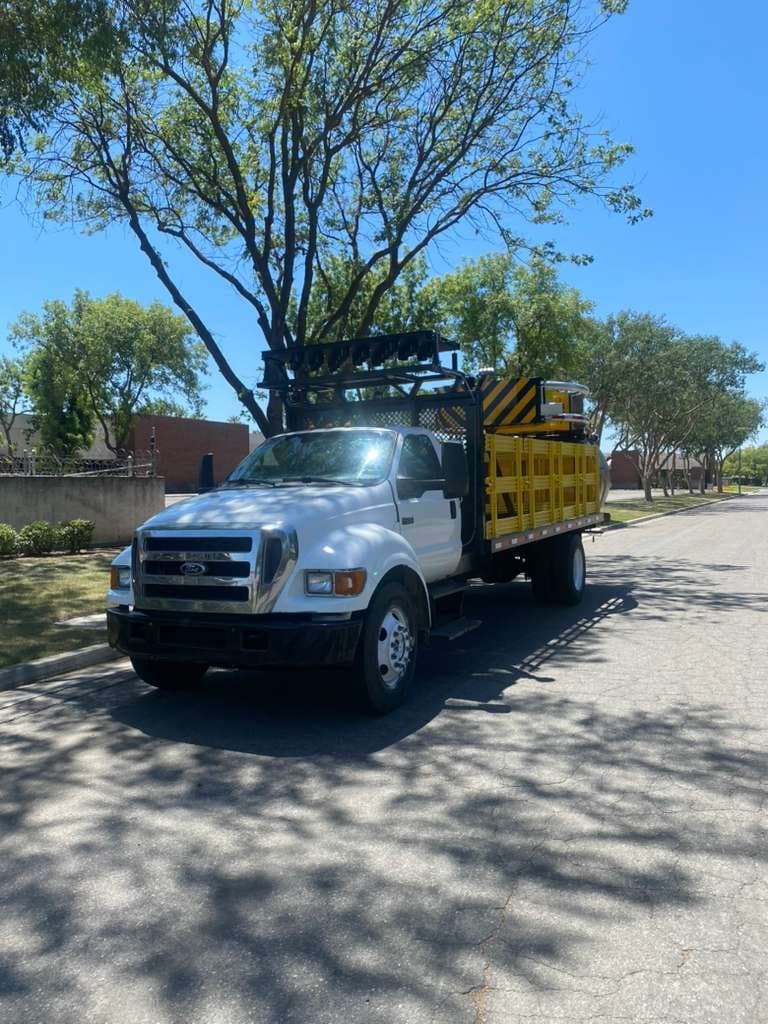
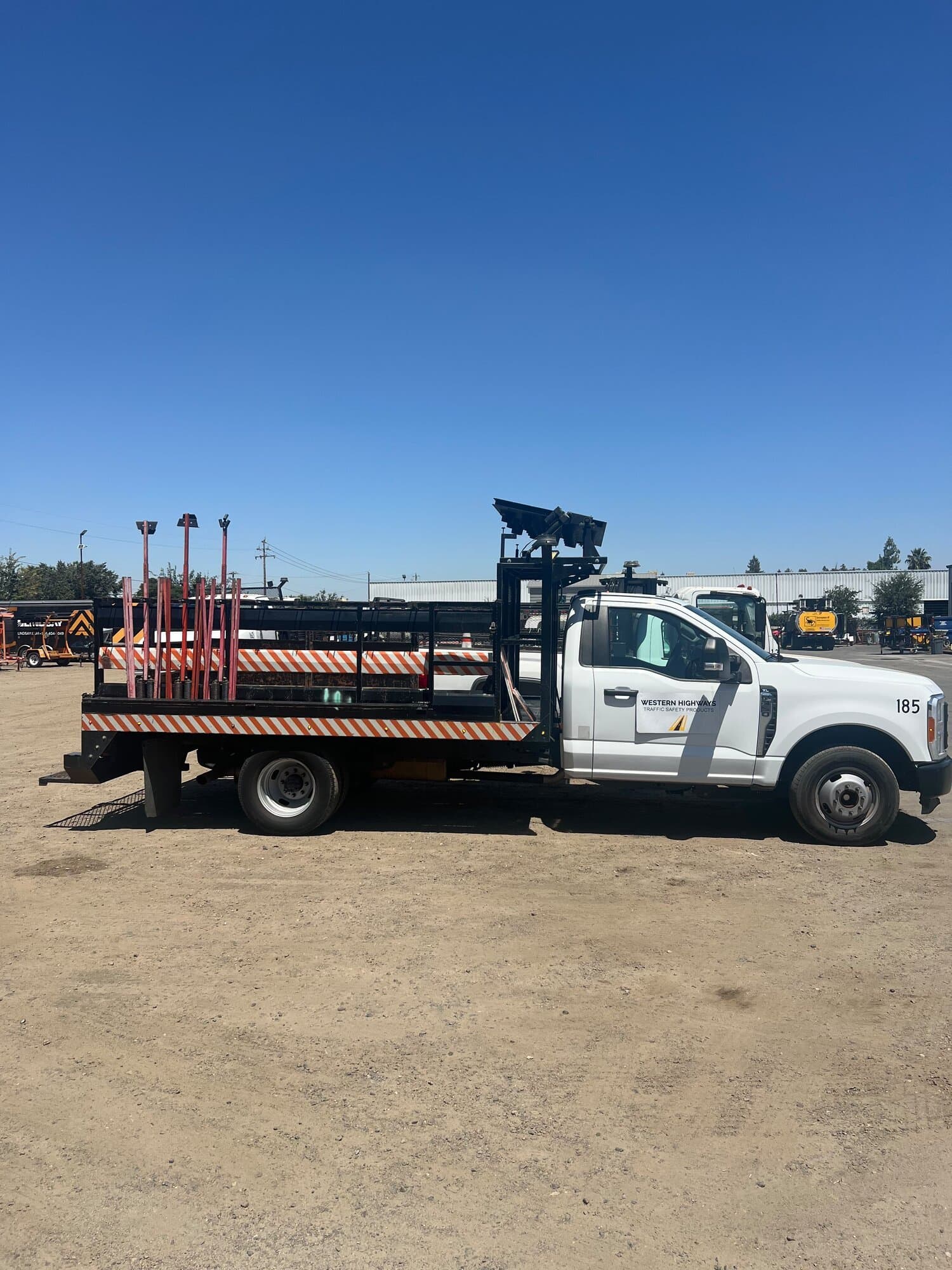
An arrow board points traffic away from a closed lane. They come in 15-lamp and 25-lamp panels, with the larger board readable from farther back and in brighter daylight. The arrow board is a directive tool: it tells drivers which way to move, not why.
Changeable message signs
A changeable message sign, also called a CMS, shows text that the crew sets for the situation. That flexibility lets you explain the reason for a slowdown, warn of a merge, or post a detour. Where an arrow board only points, a CMS can spell out the specifics.
- Use arrow boards to redirect traffic out of a closed lane
- Use a CMS for context: reason, distance, and expected delay
- Place boards far enough upstream that drivers can react before the taper
- Keep messages short so they read at speed
Pair the two. An arrow board tells drivers where to go, and a CMS a few hundred feet earlier tells them why, so they slow down before they reach the taper.
Need a truck spec'd or serviced?
Tell us the job and we'll help — to buy, rent, or lease.