How Traffic Safety Equipment Reduces Work-Zone Accidents
Work zones put crews close to live traffic. The right equipment lowers the odds of a crash and softens the ones that still happen.
Every work zone is a gap in the normal flow of traffic, and drivers make mistakes at those gaps. Safety equipment addresses two problems at once: it warns drivers early enough to avoid a crash, and it absorbs the impact when one happens anyway.
Prevention: warn drivers early
Most work-zone crashes trace back to a driver who reacted too late. Advance signing gives them time. A changeable message sign posted upstream tells drivers what is coming, and an arrow board moves them out of the closed lane before the taper. The earlier the warning, the more room a driver has to correct.
Protection: absorb the impact
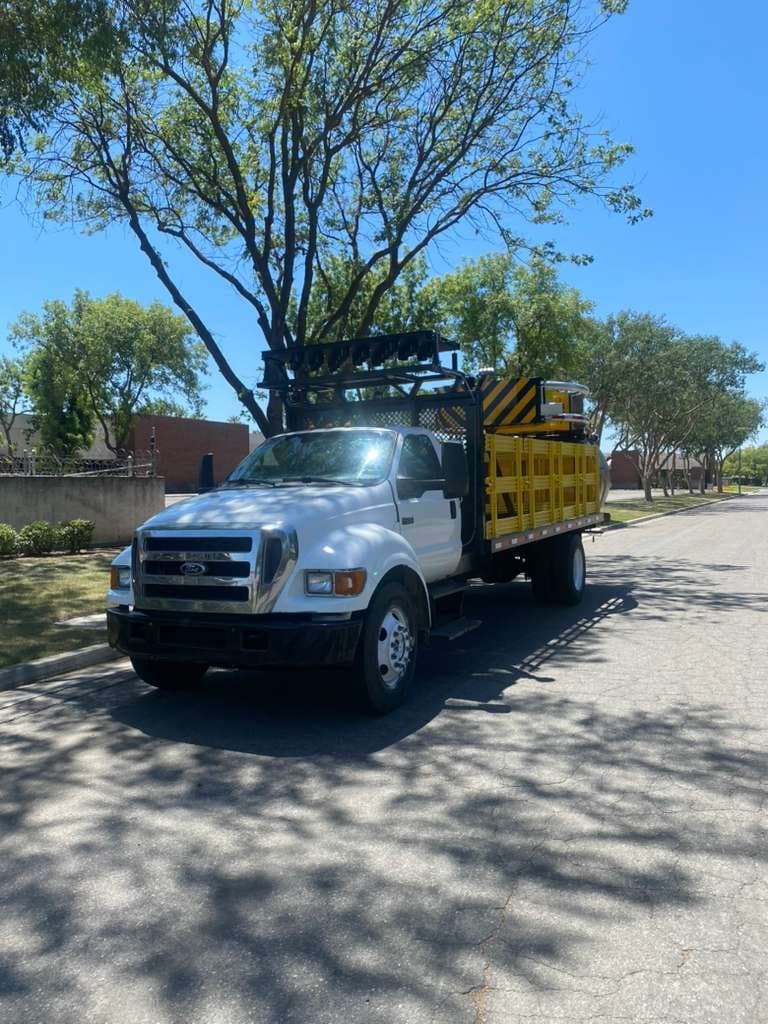
When a driver does not correct, the truck-mounted attenuator takes the hit. A TMA parks as a shadow vehicle behind the crew and absorbs an errant vehicle at speed, steering it away from the cab's coffin corner. A chassis rated around 26,000 lb GVWR or higher keeps the striking vehicle from riding under the truck. The result is a controlled stop instead of a direct hit on workers.
- Advance message signs cut late reactions
- Arrow boards move traffic clear of the closure
- MASH-rated attenuators absorb impacts up to their tested level
- Adequate GVWR prevents underride and keeps the truck in place
- Does a TMA protect the driver who hit it?
- Yes. The attenuator is designed to decelerate the errant vehicle in a controlled way, which reduces harm to that driver as well as the crew ahead of the truck.
- What speed can these systems handle?
- TL-2 units cover speeds up to about 45 mph, and TL-3 units cover 50 mph and above, crash tested at roughly 62 mph.
Need a truck spec'd or serviced?
Tell us the job and we'll help — to buy, rent, or lease.